Strengthening Community-Led Early Warning and Early Action in Nairobi's Informal Settlements
Early warning systems can save lives, but their effectiveness depends on whether communities receive, understand and act on timely information. In Nairobi's informal settlements, where residents face increasing exposure to floods and other weather-related hazards, locally led approaches are essential to strengthening preparedness and response.
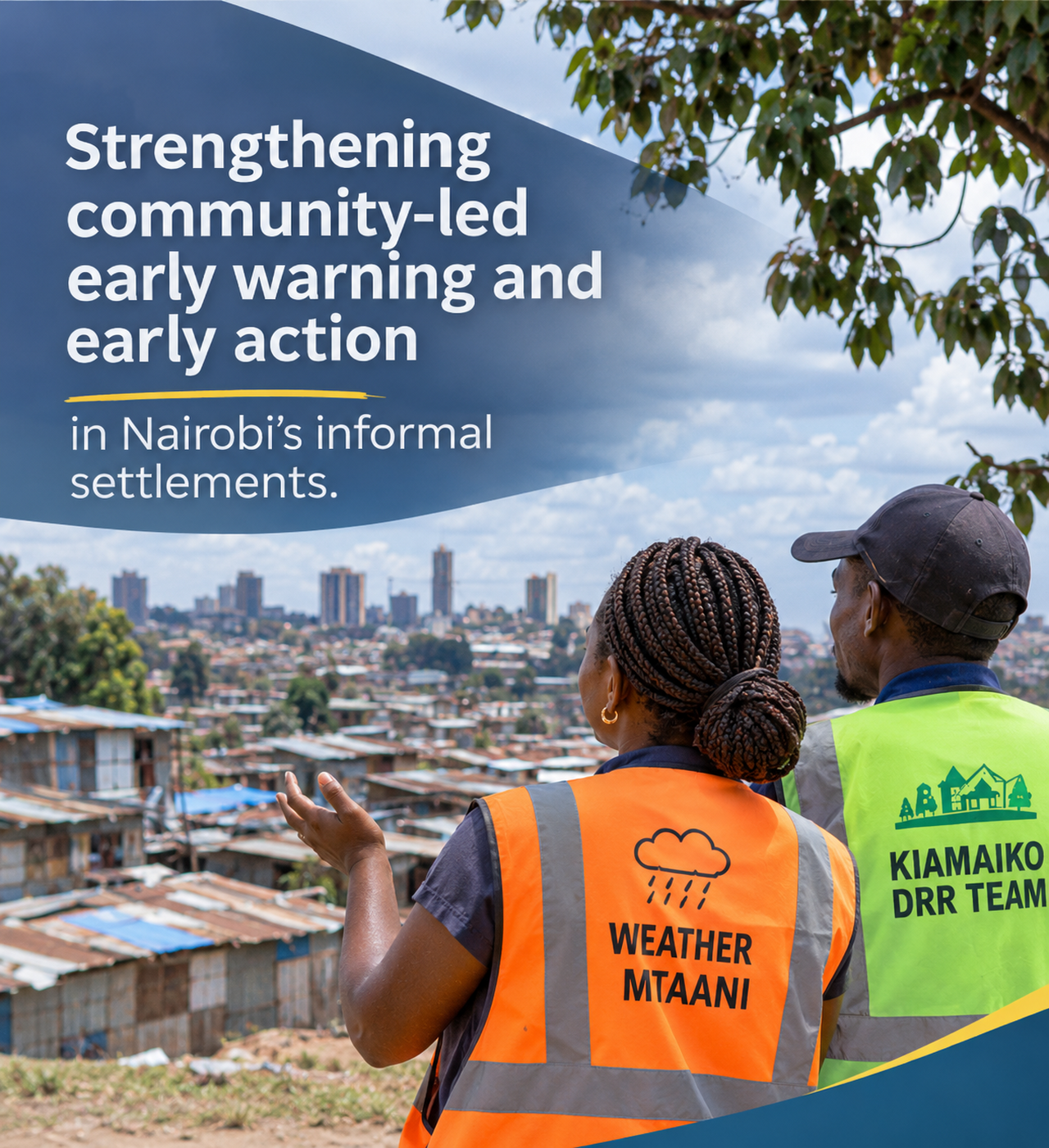
On 10 November 2026, GIZ's Resilience Initiative Africa (RIA), together with partners, supported a knowledge exchange in Nairobi that brought together community-based initiatives from Kiamaiko and Kibera to share experiences, assess existing early warning and early action systems, and identify opportunities for stronger collaboration and capacity development.
Turning early warnings into early action
The session began with presentations and rapid assessments of the two initiatives, examining their approaches, achievements and challenges. Discussions focused on the four pillars of effective early warning systems: understanding disaster risks, monitoring hazards and forecasting, communicating warnings, and strengthening preparedness and response capacities.
In Kiamaiko, participants explored a community-led disaster risk reduction system that connects residents, local responders and partner institutions, supported by the Kiamaiko Resilience Hub (KRH) Agent for incident reporting, warning dissemination and response coordination. In Kibera, Weather Mtaani demonstrated how it works with the Kenya Meteorological Department to translate forecasts into accessible messages shared through SMS, WhatsApp, social media and community activities. Through forums, children's engagement and door-to-door outreach, the initiative helps residents understand weather information, prepare for hazards and share feedback.